
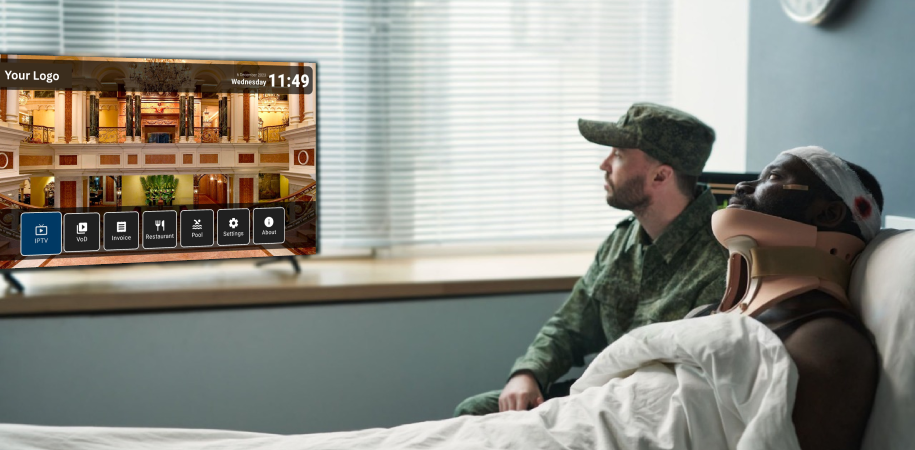
What is Hospital IPTV? Why it’s popular and Key features of IPTV
The entertainment industry has transformed rapidly, and expectations inside hospitals have changed with it. Patients no longer accept long hours of waiting with limited distractions and outdated Hospital TV systems. Comfort, information and engagement now play a real role in recovery and overall satisfaction. This is where Hospital IPTV becomes a powerful solution. By combining Interactive TV, digital services and specific content of hospitals, IPTV creates a smarter and more patient-friendly environment.
It helps patients pass time more comfortably while giving hospitals better control, communication and efficiency. In this weblog, you will learn what Hospital IPTV is, why it is becoming essential for modern hospitals, how it works behind the scenes and which features create value for both patients and hospital management. Whether you are a general reader or a hospital decisionmaker, this guide gives you a clear and practical understanding.
Table of Contents
What Is Hospital IPTV?
Hospital IPTV is a modern television and media distribution system designed specifically for healthcare environments. Unlike traditional Hospital TV systems that rely on basic cable or satellite signals, Hospital IPTV delivers television channels, videos and digital services through an internal IP network. This technology allows hospitals to stream live TV, Video on Demand content (VOD) and interactive services directly to patient rooms using Smart TVs or Android TV boxes. Because everything runs on Internet Protocol, hospitals gain full control over what is shown and how it is delivered.
At a deeper level, Hospital IPTV is more than just TV. It is a complete Interactive TV platform built for hospitals. It can display educational content, hospital information, menus, announcements and specific services on the same screen. This system improves communication, enhances patient experience and replaces outdated Hospital TV infrastructures. For hospital owners and staff, IPTV becomes a flexible digital tool that supports both comfort and operational goals.
Establish Your Hospital IPTV System
Why it Is Becoming Essential Worldwide?
Hospitals around the world are under constant pressure to improve patient satisfaction while controlling operational costs. Traditional Hospital TV systems cannot meet modern expectations anymore. Patients are used to smart, interactive media at home and they expect the same level of comfort during hospital stays. Hospital IPTV answers this need by offering Interactive TV, VOD content and personalized services through a single platform. This shift helps hospitals create a more welcoming and less stressful environment for patients.
Another key reason for the rapid adoption of Hospital IPTV is efficiency. Hospitals can manage content, updates and communications from one central system. This reduces dependency on printed materials and manual processes. IPTV also supports multilingual content, which is critical in international hospitals. As healthcare becomes more patient centered and digital, IPTV is no longer a luxury. It is becoming a standard part of modern Hospital infrastructure.

The Most Important Features Hospital IPTV Offers
1.Interactive Entertainment for Patients:
Hospital IPTV provides patients with access to live TV channels, movies, series, and on demand content. This Interactive TV experience helps patients relax and stay entertained during long stays. It reduces stress and makes time pass more comfortably. For hospitals, it replaces outdated Hospital TV systems with a flexible digital platform.
2.Patient Information and Education:
Hospitals can use IPTV to share educational videos, treatment explanations and recovery guidelines. Content can be customized based on departments or patient needs. This improves patient awareness and reduces repetitive questions for staff. Clear information builds trust and improves the overall care experience.
3.Hospital Communication and Announcements:
Hospital IPTV acts as a direct communication channel. Hospitals can display announcements, emergency messages, visiting hours or internal news instantly. This ensures information reaches patients and visitors without delay. It also reduces the need for printed notices across the Hospital.
4.Multilingual Content Support:
Many hospitals serve patients from different countries and cultures. IPTV systems support multiple languages on the same platform. Patients can select their preferred language through the TV interface. This improves accessibility and creates a more inclusive Hospital environment.
5.Personalized Patient Experience:
Hospital IPTV allows personalization based on room, ward or patient profile. Welcome messages, custom content and service options can appear on each TV. This level of personalization increases patient satisfaction and gives hospitals a premium image.
6.Integration with Hospital Systems:
Modern IPTV platforms can integrate with hospital management systems. This allows features like service requests, meal ordering or appointment reminders through the TV. For staff, this reduces workload and improves workflow efficiency. For patients, it creates a simple and familiar interface.
7.Centralized Content Management:
Hospital staff can manage all TV channels, videos or services from one central dashboard. Updates can be applied instantly without visiting patient rooms. This saves time and operational costs. It also ensures consistent content across the entire Hospital TV network.
8.Scalable for future Infrastructure:
Hospital IPTV is built on IP networks, making it easy to expand or upgrade. New services, channels or applications can be added without major hardware changes. This protects the hospital’s investment and supports future digital growth. As technology evolves, IPTV keeps hospitals ready for what comes next.
How Hospital IPTV Works?
1.The Data Sources:
Every Hospital IPTV system starts with content sources. These sources can include DVB-T or DVB-T2 antennas for terrestrial TV, DVB-S or DVB-S2 antennas for satellite channels and data servers that store videos or internal content. These sources provide live television, recorded media, educational videos and specific information. By combining multiple sources, hospitals gain full flexibility over the type of content delivered to patients.
2.Receiving and Converting Data with IPTV Headend:
All content sources connect to the IPTV Headend. The IPTV Headend is a dedicated hardware system that receives signals from antennas and data servers. Its main role is to convert this content into IP format. Once converted, the content can travel through the hospital’s internal network. This step is critical because it allows TV services to work like other digital hospital systems.
3.Managing and Organizing Content with Middleware:
After conversion, content moves to the Middleware layer. Middleware acts as the control center of Hospital IPTV. It manages channels, user permissions, interface design and available services. Hospital staff use Middleware to decide which content appears in each ward or room. Customization, language selection and service options are all handled here. This layer connects technical infrastructure with real hospital needs.
4.Delivering Content to Patients through IPTV Apps:
The final step is delivering content to patient rooms. Data travels through IP cables to Smart TVs or Android boxes. Patients access everything through an IPTV App on the TV screen. From live TV to Interactive TV services, all features appear in one simple interface. Patients can navigate easily, while hospitals maintain full control from the backend. This completes the Hospital IPTV experience from source to screen.

Conclusion and the Future of IPTV in Hospitals
Hospital IPTV has evolved into a complete digital solution that goes far beyond traditional Hospital TV. In this weblog, we learned that Hospital IPTV delivers television and interactive services through IP networks, creating a flexible and modern experience. We explored why hospitals around the world are adopting this technology to improve patient comfort, communication and operational efficiency. We also reviewed the most important features, from Interactive TV and personalized content to centralized management and system integration. Finally, we explained how Hospital IPTV works, from data sources to IPTV Headend, Middleware, and IPTV Apps in patient rooms.
Looking ahead, Hospital IPTV will play an even bigger role in healthcare environments. As hospitals move toward smarter and more connected facilities, IPTV will become a key digital touchpoint for patients and staff. Future systems will offer deeper integration with hospital workflows, more personalization, and stronger data-driven services. For hospital owners, IPTV is an investment in patient satisfaction and long term efficiency. For patients, it transforms the hospital stay into a more comfortable and informed experience. Hospital IPTV is not just a technology trend. It is becoming a standard part of modern healthcare infrastructure.